Why Table Tennis Players Learn From Chinese Coaches
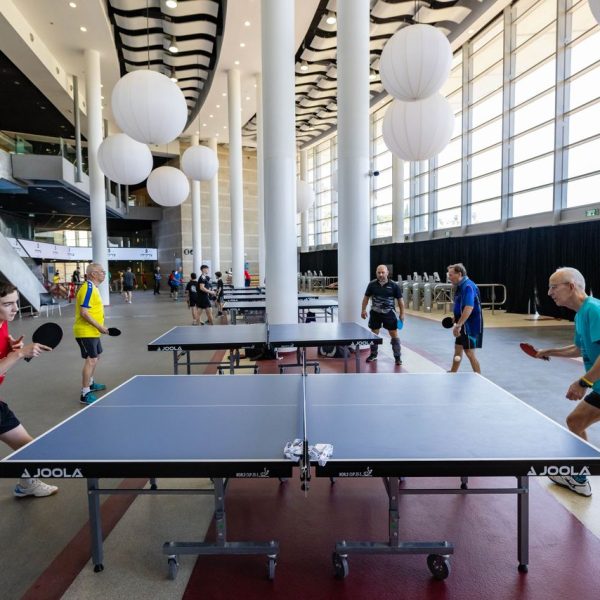
Walk into almost any serious table tennis club in Europe or North America and there is a good chance the head coach learned the game in China. The accent changes from club to club. The drills rarely do. Multiball sessions and footwork patterns and relentless serve practice all trace back to a system that has dominated the sport for decades.
At the Paris Olympics China won all five table tennis gold medals. The full Paris 2024 results show a clean sweep across singles and doubles and team events. For clubs everywhere the question is no longer whether to learn from Chinese methods. It is how to learn from them when coach and player do not share a first language.
Why Chinese Coaching Travels So Well
China has won the vast majority of Olympic table tennis titles since the sport joined the Games in 1988. That success rests on a deep pipeline of sports schools and provincial teams. Thousands of players train full time from childhood. Only a few reach the national team. Many of the rest become coaches.
That surplus of talent is why Chinese coaches now work in Germany and France and the United States and Australia. Clubs hire them for technical expertise and for their eye for detail. A good Chinese coach can spot a wrist angle problem in seconds and fix it with a handful of repetitions.
The challenge is communication. Many coaches arrive with limited English and even less of the local language. Players nod along during sessions without catching the finer points. Progress stalls and frustration grows on both sides of the table.
Mandarin in the Training Hall
Mandarin is the official language of China and it is also the working language of the world's most successful table tennis system. Training manuals and coaching videos and tactical analysis are published first in Chinese. Much of it never gets translated.
Players who pick up a few dozen coaching terms gain a real advantage. Words for forehand and backhand and footwork and serve variations come up in every session. Some clubs print bilingual glossaries and pin them to the wall next to the scoreboard. It sounds simple. It changes the pace of learning.
Coaches benefit too. Those who invest in the local language build stronger relationships with parents and club committees. They also find it easier to explain long term plans that go beyond the next tournament.
The Rise of Japan and a Second Language Pathway
China is not the only Asian powerhouse. Japan has built a strong system of its own. At Paris 2024 the Japanese women won team silver and Hina Hayata took bronze in the singles. Tomokazu Harimoto has become one of the most recognisable players on the international circuit.
Japan launched its professional T League in 2018 and it has attracted players from across Asia and Europe. For foreign players and coaches the league offers top level competition in a well organised environment. It also brings paperwork and contracts and media duties in Japanese.
Clubs that send players to Japan or recruit Japanese coaches often need Japanese English translation for agreements and training plans and medical records. Japanese business culture values precision in writing. A careless translation can create misunderstandings that damage a relationship before it starts.
Practical Tips for Clubs Working With Foreign Coaches
Start with a shared vocabulary. List the fifty terms that come up most often in training and translate them into both languages. Include technique names and common corrections and basic safety instructions.
Use video. Recording sessions lets players review corrections at home with subtitles or notes. Many coaches find that a short clip with a single annotated point works better than a long verbal explanation.
Translate the important documents properly. Coaching contracts and child protection policies and medical consent forms must be understood by everyone who signs them. Informal translation by a bilingual club member is fine for a newsletter. It is not fine for a legal agreement.
Encourage language exchange. Some clubs pair foreign coaches with junior players who help them practise the local language in return for extra tips at the table. It builds trust and it is fun for everyone involved.
What Players Can Do on Their Own
Players do not need to become fluent to benefit. Learning to count to ten and to name the basic strokes in Mandarin or Japanese takes a few evenings. Watching international matches with commentary in the original language helps the terms stick.
The governing body ITTF publishes match footage and rankings that make it easy to follow Asian players closely. Studying how they move between points is often as useful as studying the rallies themselves.
It also helps to ask questions. Coaches respect players who want to understand the reason behind a drill. A simple question in the coach's language shows effort and often unlocks a more detailed answer than a polite nod ever would.
Equipment Talk Needs Translation Too
Language barriers do not stop at coaching. Much of the best table tennis equipment comes from Asian manufacturers. Blades and rubbers from Chinese and Japanese brands dominate the professional game. Product descriptions and technical specifications are often written first for the home market.
Players who import equipment directly or follow reviews from Asian forums need reliable translations to compare sponge hardness and rubber tackiness and blade composition. A misunderstanding can mean spending a lot of money on a setup that does not suit your style. Clubs that run small equipment shops often rely on bilingual staff or trusted suppliers to explain the differences clearly.
Tournament regulations add another layer. International events publish rules on approved equipment and dress codes and anti doping procedures. Players travelling to open tournaments in Asia should read these documents carefully before they pack. Arriving with a rubber that is not on the approved list can end a tournament before the first match.
A Global Game Built on Shared Understanding
Table tennis has always been international. Players cross borders for leagues and training camps and tournaments every season. Clubs that treat language as part of coaching rather than an afterthought will get more out of every foreign coach th
Businesses face the same lesson when they expand into new countries, where good products can stall if customers cannot understand them. UK startups that invest in business translation services build a multilingual customer journey in which enquiries, contracts and aftercare all make sense locally. That preparation turns a language barrier into a sign of respect for the customer's own culture. As in sport, the organisations that communicate best usually progress furthest.
The same principle applies beyond table tennis: progress in any sport depends heavily on the quality of coaching you receive. A great coach adapts their communication to the athlete, sets clear goals, and builds trust over time. Learning how to choose the right personal trainer for your goals can make the difference between stagnating and steadily improving. Whether the sport is table tennis or fitness training, the right guidance accelerates every part of the journey.